 Visit
Visit
 Explore
 Education
 Stories
 About us


Collection Projects
With special projects, we research and connect our collection to new creators and stories. This keeps 700 years of history alive, for now and for the future.
Investigate and connect
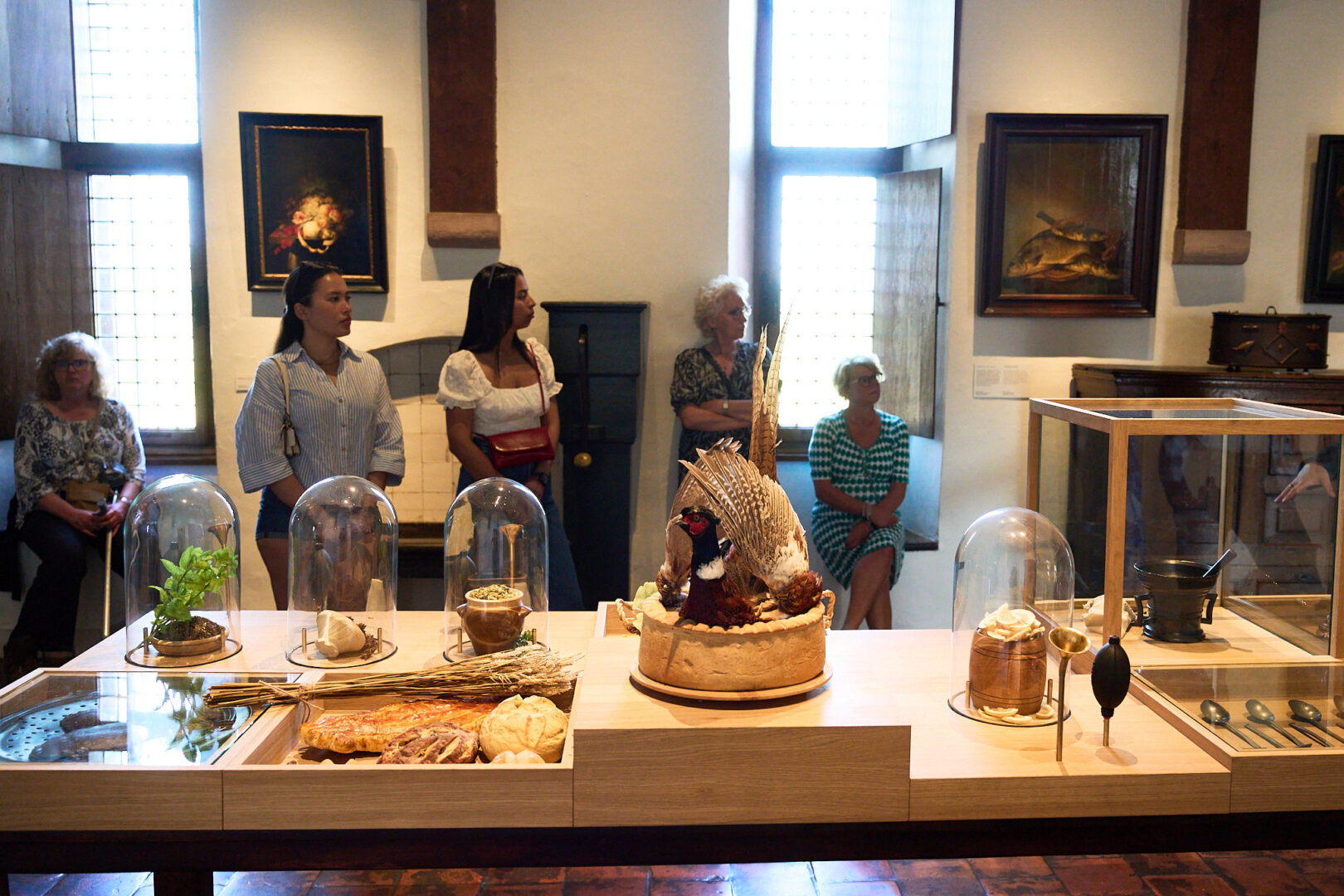
The collection of the Muiderslot consists of paintings, armor, weapons, furniture, books, drawings, sculptures and utensils. But… ..did you know that the (forgotten) vegetables, plants and herbs in the castle gardens are also part of our collection? We call that our green heritage. The nice thing is that there are many connections between the objects in the castle and the gardens.
Through various collection projects, we conduct research and explore unexpected perspectives with others. Read more about our collection policy in our collection policy plan for 2025 – 2028
Collection project Art of Connecting (2019-present)
The Muiderslot has special stories: From P.C. Hooft to spoken word, from Prunus domestica to Heel Holland Bakt. They show how everything is connected, but those connections are not always visible. That is why we are improving our knowledge base and collection data to make heritage more usable, sustainable and visible. For example, we are making the green collection digitally searchable, cleaning up our registration and involving various experts to look at our collection. With thanks to Mondriaan Fonds.
Collection project Green & Sustainability (2020 – 2025)
For more than 40 years, garden conservator Henk Boers has been working with volunteers to maintain the castle gardens of the Muiderslot, based on 17th-century models. From 2020 to 2025 he was supported by biologist and botanist Thiëmo Heilborn, who, as conservator of Green & Sustainable, focused on management as well as knowledge transfer to younger generations. “Plants tell stories, if you know how to look and listen,” said Thiëmo. Thanks to this collection project, new educational activities and special collaborations have emerged, such as with the Fawaka Entrepreneurial School Fawaka Entrepreneurial School. Thanks to the Young Heritage Talent grant from the Mondriaan Fund.
Video series of Collection Explorers
For the series ‘Collection Explorers’ we invite people from the Muiderslot as well as from outside to explore our collection. Everyone sees something different, even though we are looking at the same thing. One collection but many different perspectives and stories. Check out the stories of collection explorers below or watch the whole series on our Muiderslot Youtube channel.
Seasonal vegetables: Chef and presenter Nadia Zerouali is invited to the Muiderslot to take a closer look at the painting “The Prosperous Kitchen. The fruits and vegetables splash off the canvas. And the funny thing is: those same ingredients also grow ín the castle gardens. Only … not all at once, as the painting suggests.

Tropical surprise: Tropical botanist Thiëmo Heilbron takes a look at the Muiderslot’s greenhouse. There you will find plants like the banana, coffee, tea, citrus, cactus, sweet potato and sopropo. These are plants that most people now think it is quite normal to find every “ordinary” in the supermarket. Not Thiëmo, he likes to bring back the wonderment for the greenery around us.
Slow fashion in the seventeenth century Madelief Hohé loves seventeenth-century costumes. As curator of fashion and costume at the Kunstmuseum in The Hague, she was invited to the Rijksmuseum Muiderslot to look at the clothing on an old family portrait. The cycle of fashion back then turns out to be “slow fashion” avant la lettre.

Bumblebees and kestrels: Kelly Driessen and Sanne Heldens take a tour of the castle. One is an urban ecologist for the Municipality of Gooise Meren, the other an ecologist at the Muiderslot. It turns out to be a good place for critters there, among the plants, in the water and in the air. Nature also makes good use of the castle itself, which was once built for people. The ecologists discuss what the Muiderslot is undertaking in terms of nature enhancement and biodiversity.

Dijkgraaf: As a museum docent, Sefania Vitalis often talks about P.C. Hooft, one of the most important residents of the Muiderslot. You may know him as a poet and writer, but he had other functions. He was administrator of the area around the castle, as well as a dikewarden. The latter position was created by Count Floris V, who had Muiderslot built near the water in the thirteenth century. And with that he started a long tradition of dike counts, many of whom lived at the castle.

Water pumps at the Muiderslot: As water manager Maarten Ouboter (Waterschap Amstel, Gooi en Vecht) makes sure we keep our feet dry. He keeps a close eye on the water works in the area. So too at the Muiderslot, where you will find the “Stone Bear,” a hollow lock built in 1851 to flood the area behind when the enemy came. Still today, the Stone Bear is used as a water intake for the Vecht region. Only, with the dry summers, more is needed. Martin explains how we can protect both heritage and our future.
Best before: The Muiderslot is a dream spot for historian and cook Siebren Houwer. Using paintings and objects in the 17th-century castle kitchen and plants in the castle gardens, he examines what people used to eat, why they did it and when. The food preparation of those days we would now label as sustainable, however, back then it was pure necessity.

Light in the darkness: The great thing about the Rijksmuseum Muiderslot collection is the stories behind the objects that show what life was like here, according to collection curator Dominique van den Broek. She brings to light a number of everyday objects, such as a chandelier, disc candlestick and window. Everyday for us at least, light used to be a showpiece!