 Visit
Visit
 Explore
 Education
 Stories
 About us


One of the oldest museums in the Netherlands
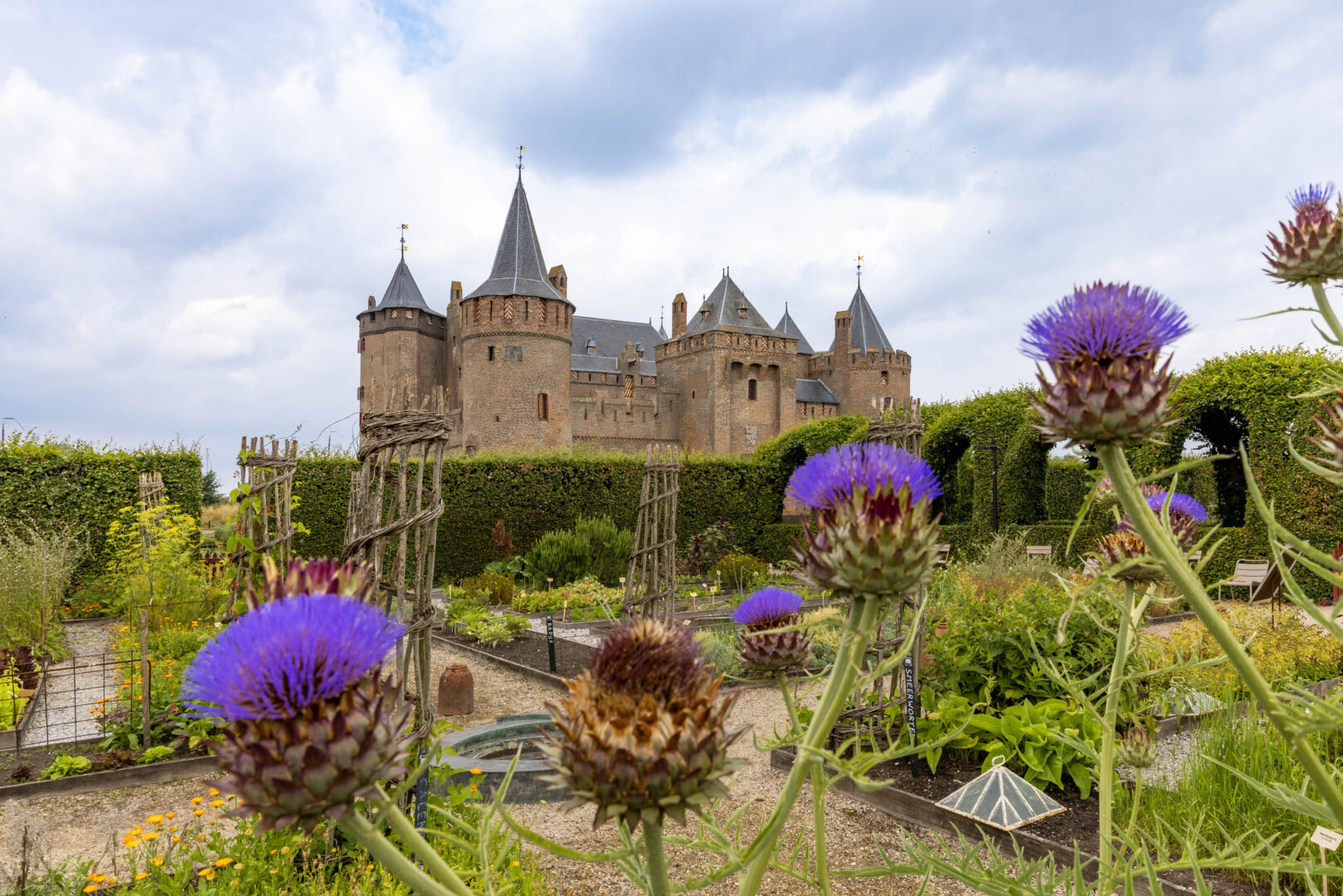
A real museum
In 1825, the Muiderslot is in poor condition. The roof has collapsed and the walls are shaky. An action group saves the castle from demolition. But what should be done with it? In 1828, the Ministry of the Interior appoints an advisory committee to consider the pile of stones. Their advice: turn it into a museum.
But there’s a problem… There is no money! Fifty years pass, and the castle deteriorates further. Yet the advice remains unchanged: the Muiderslot must become a museum. Louis Diederik Taunay is appointed slot guardian: someone who has an eye for the future of the castle. In addition, the official in charge, Victor de Stuers, appoints advisors from the state. They may turn the Muiderslot into a real museum.
Military area
However, Louis Diederik Taunay, as final guardian, does not want to wait for advice. He already begins dressing the rooms. He brings furniture and paintings from home to make the castle accessible to the public as soon as possible. With these objects, Taunay lays a foundation for the collection. Opening to the public is not yet possible. This is because there are still explosives in the castle’s cellars. Not until those are cleared can Taunay get to work.
Meanwhile, the appointed state advisors are doing research; into the history of the building, what everything used to look like and what they can make of it now. They are given an annual budget for urgent repairs. But, mind you, the grounds around the castle are off-limits military territory. As the Muiderslot prepares for a future as a museum, five bastions are being built around the castle to deter uninvited guests.
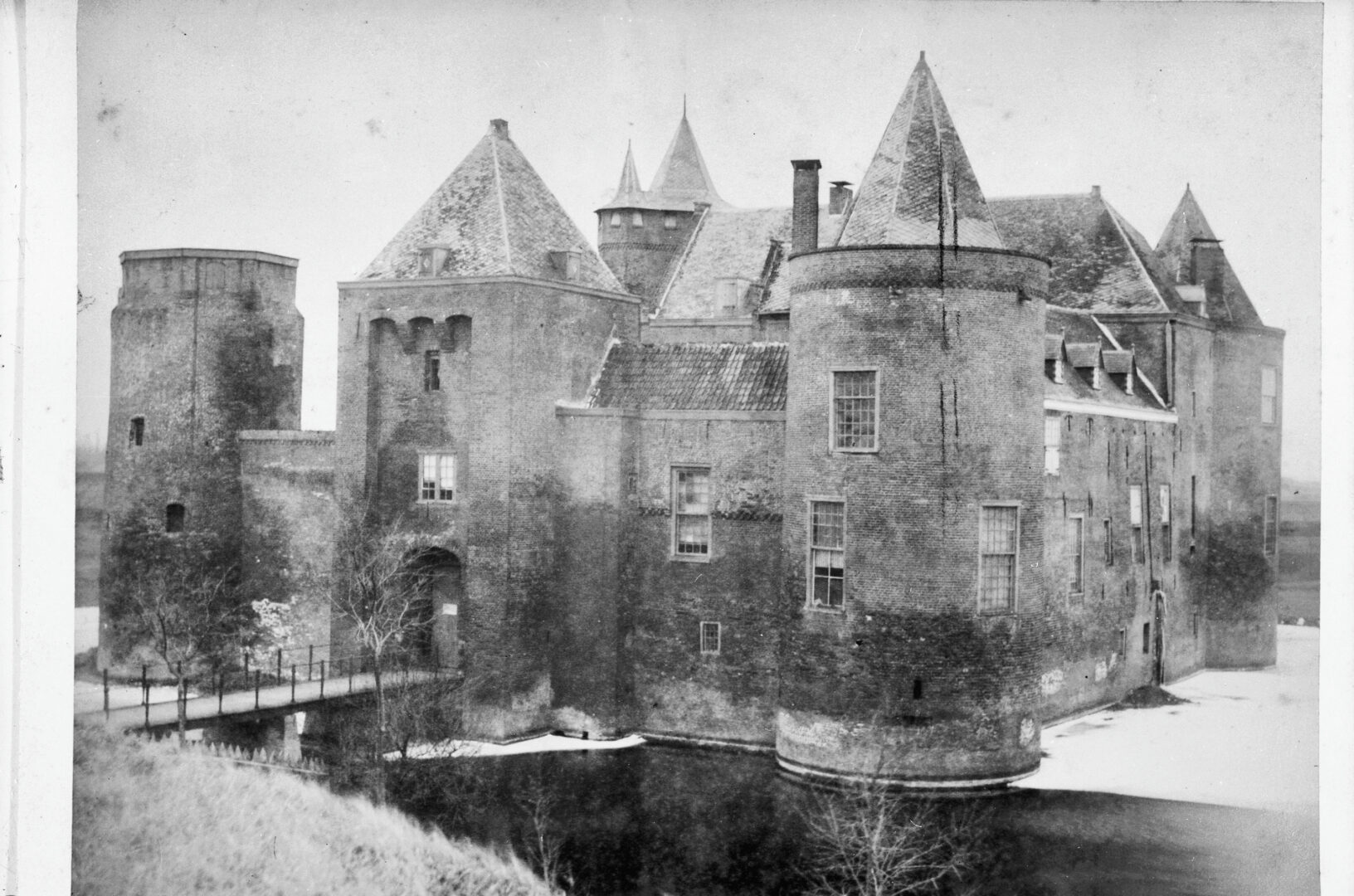
The Muiderslot in 1886. Photographer A. Mulder. Cultural Heritage Collection, no. 16565
Time for a party
In 1876, a few more paintings were purchased from the ministry’s annual contribution. All in 17th-century style, just as if P.C. Hooft had never left the premises. All that hard work pays off: the Muiderslot gets the title of national museum. Just a beginning. The castle must be further refurbished, the collection expanded. And, more importantly: there must be more money.
The celebration of P.C. Hooft’s 300th birthday offers opportunities. The party committee, led by Amsterdam alderman of education Warner Willem van Lennep, see the Muiderslot as the place to celebrate. They organize a fundraising campaign and ask the relevant government advisor and renowned architect Pierre Cuypers to transform the Ridderzaal into a party location. The party is a great success. Thanks to an artists’ initiative, several history pieces of the Muiderring are created. This inspires the party committee to continue their work. Therefore, in 1882 they establish their own committee for the internal restoration of the Muiderslot. Something that leads to great conflicts with Victor de Stuers “and his men.”
The commission has very different plans for the Muiderslot than the ministry. Still, the national advisors should be grateful to the committee. Because thanks to their efforts, there is more attention for the castle. More attention also means more money. As a result, the castle can be fully restored. In addition, the committee makes purchases for the museum. Including a bed carriage and roasting spit. On June 28, 1913, the first exhibition opens in the Muiderslot. Visitors can take a look inside the castle for ƒ 0.50 which, according to the exhibition pamphlet, “is much more beautiful now than the hollow used to be.”
Bombs & bulldozers
In 1947 it is already time for another celebration. This time it is the celebration of the 300th anniversary of the death of P.C. Hooft. This time the secretary of the Rijksmuseum Amsterdam, Ton Koot, is assigned to get the castle party ready. Koot takes a rigorous approach: furniture is replaced, paintings moved. Cuypers’ Ridderzaal gets a new fireplace and he fills the rest of the rooms with work from his Amsterdam employer’s collection.
This party is also a great success. Koot is hired as lock guardian and remains so until his retirement. As slotvoogd, he experiences an important change: in 1954 the grounds around the Muiderslot are relieved of its military role. Koot immediately wrote a letter to the ministry. His suggestion: we blow up the bombproof buildings and plant gardens, just as P.C. Hooft had in the 17th century.
No sooner said than done. Thirty men from C Company of the 4th Division Engineer Battalion from Nunspeet are deployed to remove the bombproof buildings from the grounds. A few buildings are blown up, but to ensure the safety of the castle, a bulldozer is used for the rest. The demolition will take a total of six months. While the rubble is still being cleared, plans for a plum orchard and herb garden are already in the works. This is the beginning of the green collection.
Rijksmuseum Muiderslot Foundation
Over the years, responsibility for Rijksmuseum Muiderslot passes from one ministry to another. Until 1994, when the Rijksdienst Kastelenbeheer (part of the Ministry of Education, Culture and Science) is disbanded. As a result, the Muiderslot is officially no longer a national museum. Like the other national museums (such as the famous Rijksmuseum in Amsterdam), the castle is allowed to keep its name. But from now on, the new foundation, Stichting Rijksmuseum Muiderslot, will determine what the museum looks like.
In addition to the Dutch government’s collection, the foundation purchases ancient objects, such as historic table linens, as well as modern art. And that work, too, is rewarded. In 1996, the Muiderslot is included in the Museum Register. The former national museum thus shows that, eighty years after its first exhibition, it is still “not a ruin, on which we draw the attention of the stranger” but an extraordinary building full of stories.