Visit
Visit
 Explore
 Education
 Stories
 About us


Fishing at Muiderslot Castle
Fish on the menu
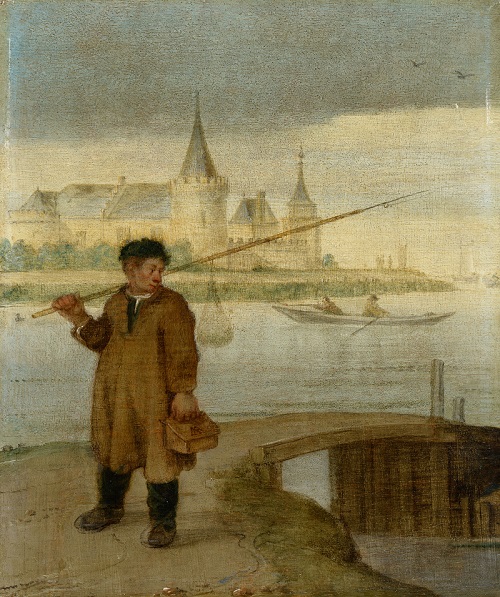
Saltwater fish were more expensive and were especially popular with the nobility and other wealthy inhabitants. Freshwater fish, on the other hand, more often ended up in the stews of peasants and commoners. The price of sea fish was higher because it took more work to catch them. Fishermen needed a strong boat and experienced crew that could navigate the sea. Freshwater fish such as pikeperch and salmon, on the other hand, could be caught from the river by almost anyone with a net and rod. Therefore, these fish species were often cheaper.
Herring
Herring was an exception. This fish occurred in large numbers in the Zuiderzee and was therefore cheap. Herring was especially loved by ordinary citizens and farmers. The nobility had little use for it and saw herring primarily as a fish for the poor and the rabble. This may be a reason why dishes and recipes with herring hardly appear in later cookbooks. The fish was seen as too ordinary and commonplace. Despite the low status herring had among the wealthier population, the fish was enormously popular. So much herring was caught and sold that there was talk of overfishing as early as the seventeenth century. The town of Muiden also flourished thanks to the successful fishing on the Zuiderzee. The Zuiderzee was a body of salt water up until 1932, when the Afsluitdijk closed it off from the North Sea. It changed into a freshwater lake which it still is now.
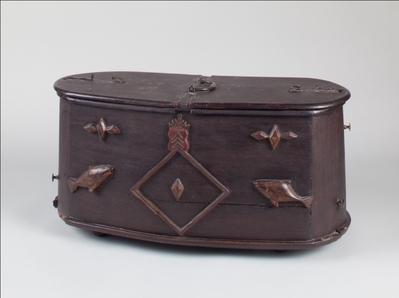
Wooden fish basket, 1700 – 1799. Muiderslot Collection
Fish and the Muiderslot
Writer and poet P.C. Hooft, who lived at the Muiderslot for a long time, also wrote about the great importance of fish. In his Nederlandsche Historiën, he describes the hysteria surrounding herring during the Relief of Leiden in 1574. Hooft wrote Nederlandsche Historiën, in the period between 1628 and 1647. He wanted to capture the history of the rebellion in the Low Countries (the Netherlands) and the birth of the Republic in one historical narrative. In a passage about the Relief of Leiden, he tells how the hungry people of Leiden squeezed each other to death to get some herring and white bread distributed by the Sea Beggars.
Fish banquet at the Muiderslot
That fish was also popular in Hooft’s time is evidenced by an event in 1630. In honor of a visit by stadholder Frederik Hendrik, Hooft had an elaborate fish banquet prepared at the Muiderslot. In the end, the stadholder changed his plans and the visit did not take place. Hooft was left with tons of rotting fish.
Dams, levees, dams and pumping stations
Many fish still live in the water around the Muiderslot but a lot has changed in the past centuries. Fish ecologist Jacques van Alphen, working for the Water Board Amstel, Gooi & Vecht, looks at the collection of the Muiderslot with his expertise. Which fish were depicted or eaten? And did they correspond to the fish that actually swam here?