Visit
Visit
 Explore
 Education
 Stories
 About us


Knights and armor
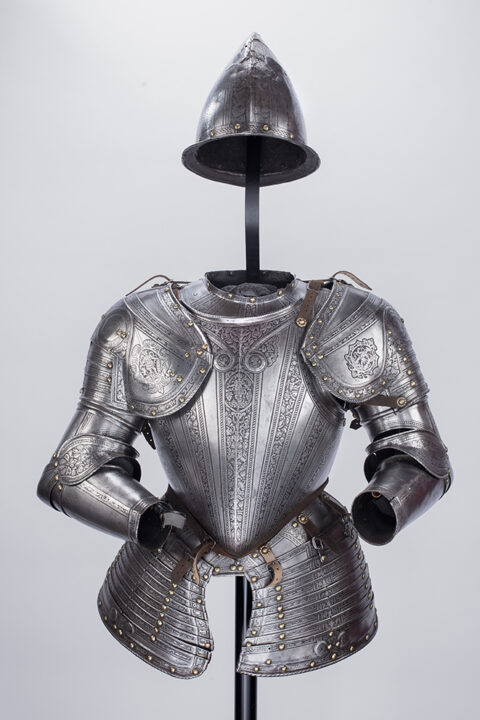
More than fifteen components
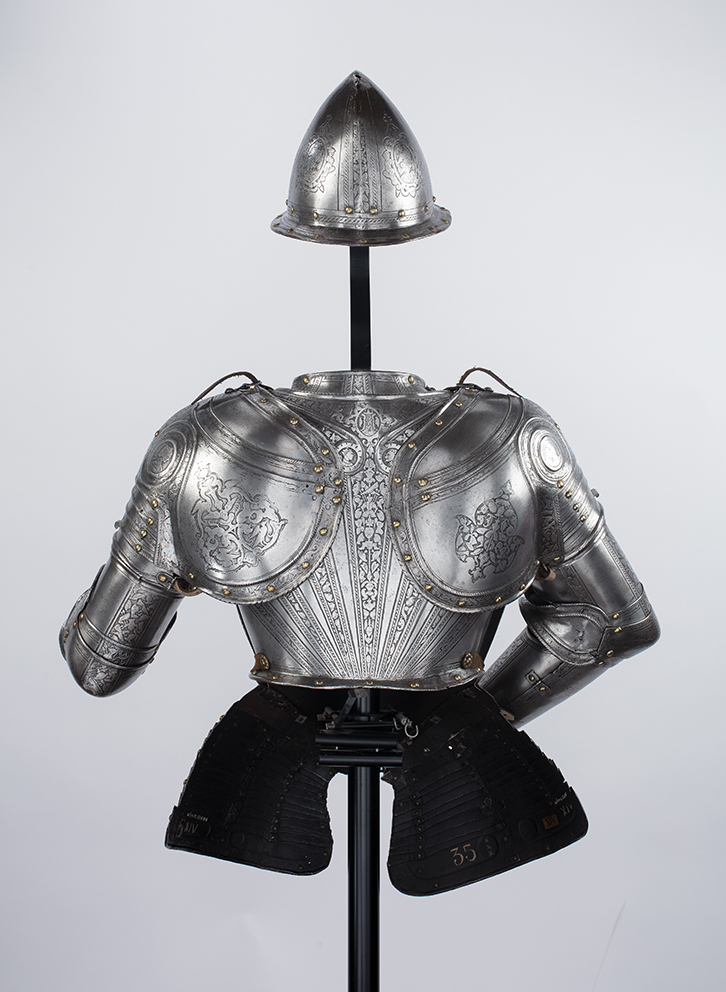
A complete harness consists of fifteen (and sometimes even more) parts. Therefore, a suit of armor quickly weighs between 30 and 50 kilograms! A knight’s armor may consist of:
- Helmet and Visor (protective visor for your face and/or eyes)
- Neck piece, Shoulder plate, Chest plate, Armpit protector, Elbow piece and Forearm piece
- Gloves
- Hip harness, Braguette (codpiece, protective piece for your pubic area), Thigh plate, Butt piece
- Shin plate, Knee plate and Sabaton (iron shoes)
Show off or fight
Sometimes knights also wore a hauberk under their armor. A hauberk is a vest (kolder) made of metal rings (chain mail). The rings protect the wearer from sharp stabbing weapons such as swords, knives and spears. Because a hauberk is lighter, more flexible and often cheaper than armor, some knights chose to wear only a hauberk with a leather coat over it.
Weapons, swords and spears
In addition to protective clothing, knights naturally carried weapons with them. In the collection of the Muiderslot we have several swords and spears. But knights also used more distinctive weapons, such as a battle flail. A flail is a medieval weapon that consists of a wooden handle with a chain with a metal ball attached. Thanks to the chain, a flail allows you to hit opponents with a coat of arms more easily; in fact, you can throw it around the coat of arms.
Show off or fight
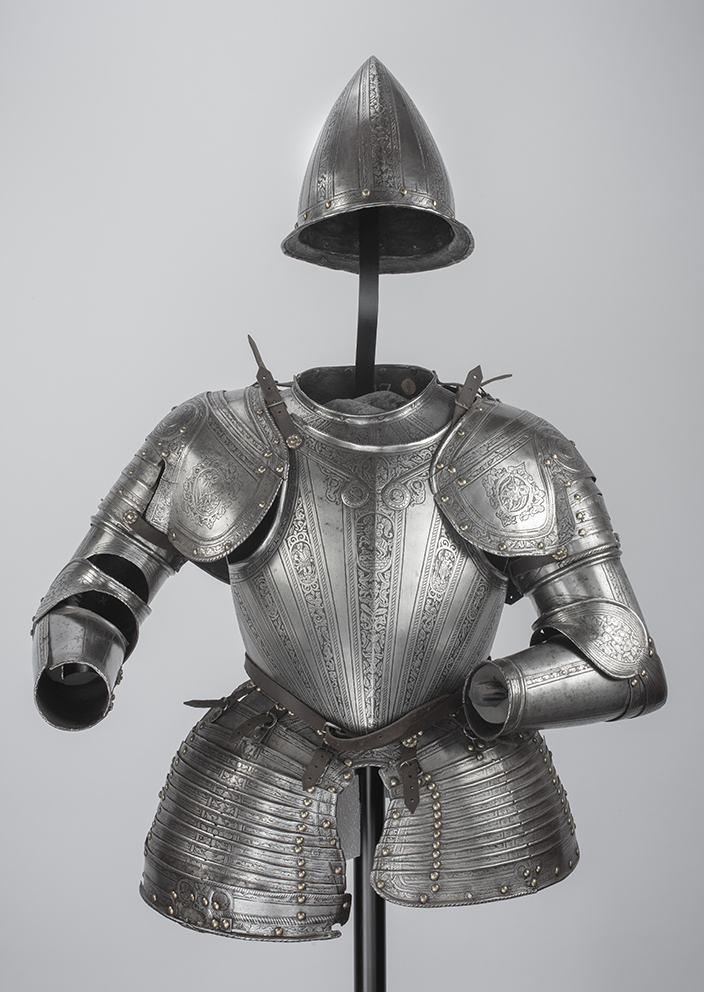
In addition to armor worn for protection while fighting, you also had armor to show off. The Muiderslot has a few in its collection.
Colors and meanings
Armor protected knights during a battle or mêlee (“melee,” a type of tournament for knights). But when everyone was wearing armor, it was hard to tell who was friend or foe. Therefore, in the painting “Battle of Lekkerbeetje near Vught,” the two sides wear a ribbon around their arms: Lekkerbeetje’s team in red and his opponents in white. But some knights came up with a more creative solution….
What is a coat of arms?
During the twelfth century, many knights painted their coat of arms: a round metal or wooden plate used to protect themselves. For the paintings, they used colors and symbols that told something about the bearer. You couldn’t just put anything on your coat of arms. A knight was only allowed to choose from seven colors. Each color had its own meaning:
- Blue: Fair or royal
- Red: Courageous or brave
- Green: Mild or hopeful
- Purple: Noble or dignified
- Black: Dangerous
- Yellow (gold): Wisdom or wealth
- Gray (silver): Faithful or strong
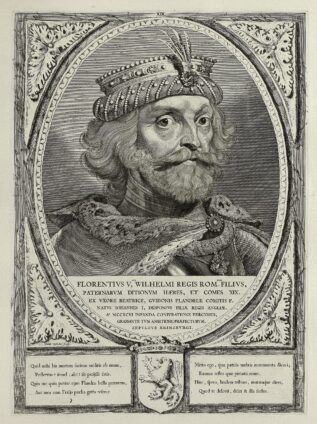
Coat of arms Floris V
So a painted coat of arms was meant to pick apart knights. But gradually these paintings were used for many more things. So nowadays, when we use the word “coat of arms,” we mean the image on the shield rather than the coats of arms the knights carried with them. There are coats of arms for families, municipalities and even countries. A well-known coat of arms is that of Muiderslot resident and Count of Holland Floris V (1254-1296): a yellow (gold) shield topped by a red lion with blue nails and tongue.
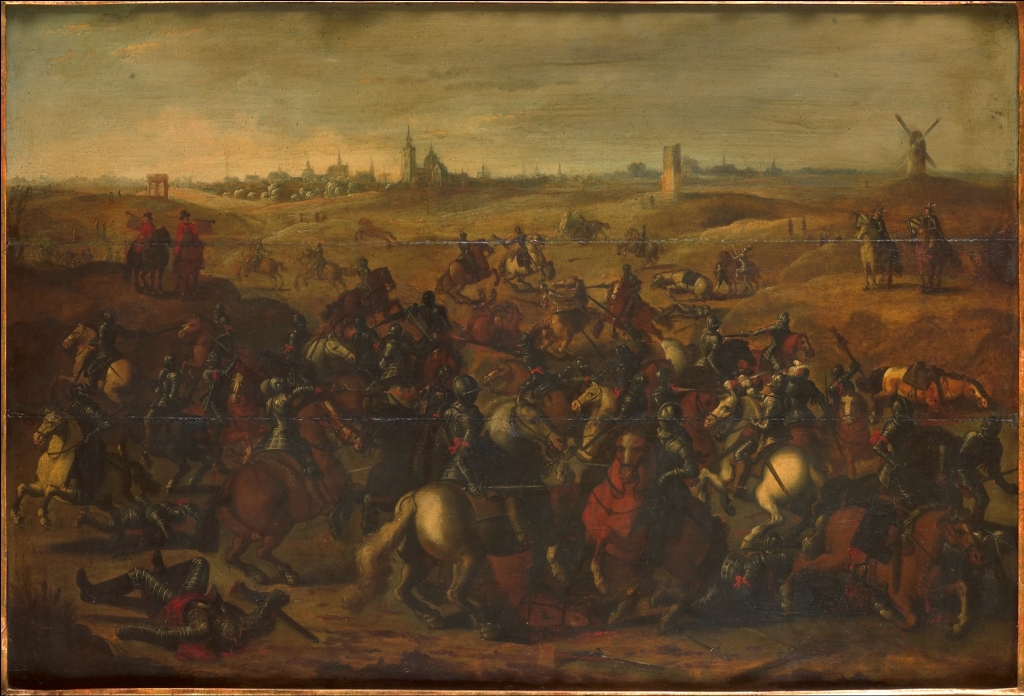
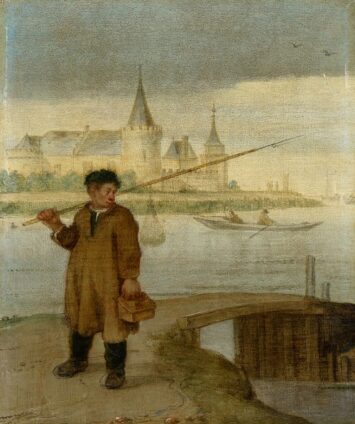
Battle of Lekkerbeetje near Vught, copy after Sebastiaan Vranx, 1600/1650
Role assignment and opportunities
The age of chivalry takes place during the Middle Ages. This is a period when the Christian church had a great influence on European society, including the division of roles between men and women. Women were seen by the church as subordinate to men. As a woman, this meant you had no choice about your own future. Although this could vary by class (clergy, nobility and peasantry), the most important role for a woman was to keep up the household. Even if the household was far from home.
Female crusaders
During crusades (armed treks from the Christian faith), women accompanied the knights. They were responsible for cooking food, washing clothes and de-hairing knights. But, when the need arose, these female crusaders also had to fight along. For example, extra hands were needed to defend captured cities during the Second Crusade (1147-1149). Victories were also won during the Third Crusade (1189-1192) thanks to female interference.
Female knightly orders
But then, isn’t there such a thing as a female knight? Yes there is! A woman could become a knight in several ways. The most common way was through inheritance. When a knight died, his title and responsibilities could be assumed by his wife or daughter. But there are also a handful of women who (voluntarily) stood on the battlefield. Consequently, there are knightly orders that were created specifically for women, such as the Order of the Hatchet (Ordo de la Hacha). This order was founded in 1149 by the Count of Barcelona for its heroic defense of the city of Tortosa in Catalonia.