Visit
Visit
 Explore
 Education
 Stories
 About us


Muiderslot: more than 700 years of history
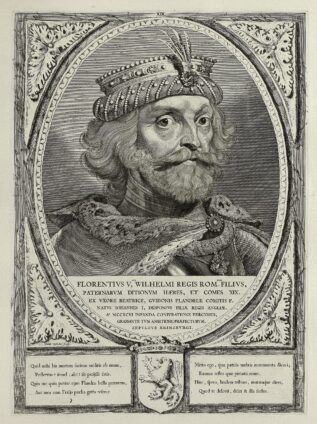
Count Floris V
Count Floris V is an important man in the Middle Ages. As count, he rules Holland, Zeeland and West Friesland. He is always working to increase his power. He does this by conquering land. Because the more land you have, the more important you are. In 1282 Floris therefore bought the lordships of Waterland and Zeevang. To protect this new area well, he has several castles built. Among them the Muiderslot.
Count Floris V does not have a castle built just anywhere. For this he chooses a strategic spot: at the mouth of the Zuiderzee and river Vecht. But there is already a house on this spot. Floris orders this house to be reinforced and expanded. So the first bricks are older than the castle itself! The new building is named: ‘t Huys te Muyden (the House in Muiden).
‘t Huys te Muyden (1285 – 1297)
‘t Huys te Muyden is a moated castle. You can recognize a moated castle by the moat surrounding it. When the castle is attacked, all the castle residents have to do is raise the drawbridge. The moat makes it difficult to storm the castle, but not impossible…. That’s why the building gets extra thick walls. Up to 1.5 meters deep in some places. So the enemy has to do his best to gain access to the Muiderslot.
Yet it happens: in 1296, Count Floris V is assassinated. His son and successor, John I, is still in England. This gives Willem Berthout of Mechelen, the new bishop of Utrecht and enemy of Count Floris V, access to the castle. Like Floris, the bishop is an important man. And like Floris, he wants to increase his power. He conquers the castle and orders it to be completely demolished. William reuses the stones of the Muiderslot for his own castle in Utrecht.
A new beginning (1370 – 1477)
Meer dan 70 jaar bestaat het kasteel van graaf Floris V nog slechts uit een hoopje stenen. Maar dan komt graaf Albrecht van Beieren. Hij is vanaf 1358 baas in Holland, Zeeland en Henegouwen. Net zoals graaf Floris, weet hij dat de kasteel ruïne op een belangrijke strategische plek staat. Daarom laat hij het Muiderslot opnieuw bouwen.
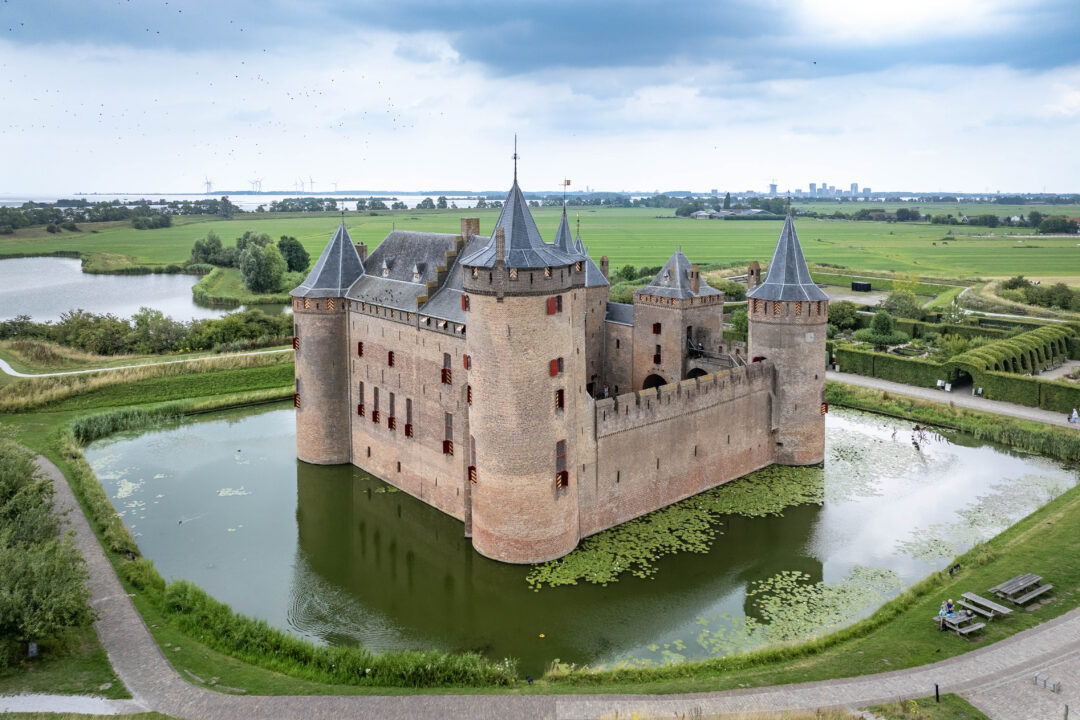
Count Albrecht uses the foundation of ‘t Huys te Muyden, but also adds new things. The most important addition: corner towers! From these new corner towers you have a better view of the surroundings and enemies. In addition, he incorporates all kinds of traps into the towers. This makes it even more difficult for an outsider to penetrate. The castle will also have two residential wings. Albrecht thus laid the foundation for the castle that still stands today.
Until 1436, Muiderslot remained in the possession of the van Bavaria family. Then the castle is transferred to the House of Burgundy, a powerful noble family from France. By order of Duke Philip III of Burgundy (Philip the Good), the castle was decorated according to the latest fashion. He had stained glass windows made and sandstone figures placed near the fireplace. Unfortunately, Philip himself never saw the result, but the sandstone figures are still there today! Upon the death of Philip’s son, Charles the Bold, the castle came into the hands of the city of Amsterdam.
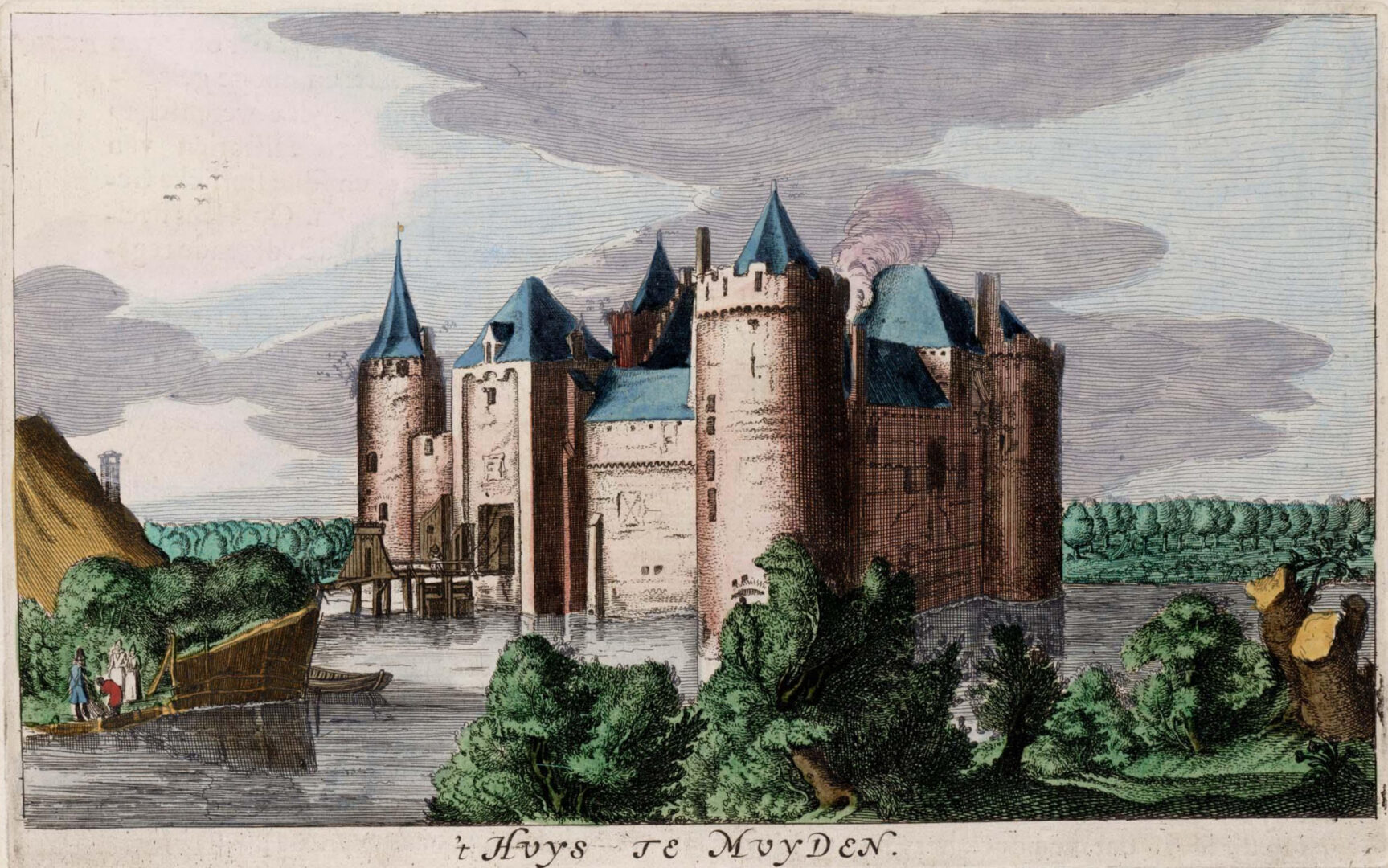
The Muiderslot as ‘t Huys te Muiden, print Atlas van Stolk, 1649
Pieter Corneliszoon Hooft
Starting in the 15th century, the city of Amsterdam owns Muiderslot. They reinforce the earthen walls around the castle and turn it into an official residence: a house for the most important representative of the city. The most famous is Pieter Corneliszoon Hooft. He lived there for almost 40 years.
Thanks to the French Revolution, in 1795 the city government of Amsterdam is taken over by the Amsterdam Revolutionary Committee. This puts the country and the Muiderslot in the hands of the French. Under the leadership of Louis Napoleon Bonaparte, the castle became a barracks with an ammunition depot. On November 15, 1813, the French troops must withdraw from Amsterdam. William Frederick of Orange-Nassau is proclaimed the first king of the Kingdom of the Netherlands.
King William I must make some tough choices. The national debt is sky-high. He therefore establishes an institution, the Amortization Syndicate. This institution must pay off the national debt. The plan: make a list of properties that can be sold. The Muiderslot also appears on the list. The castle is still used as an ammunition depot and prison, but is in very poor condition. Refurbishing it will cost too much money, so let’s sell it.
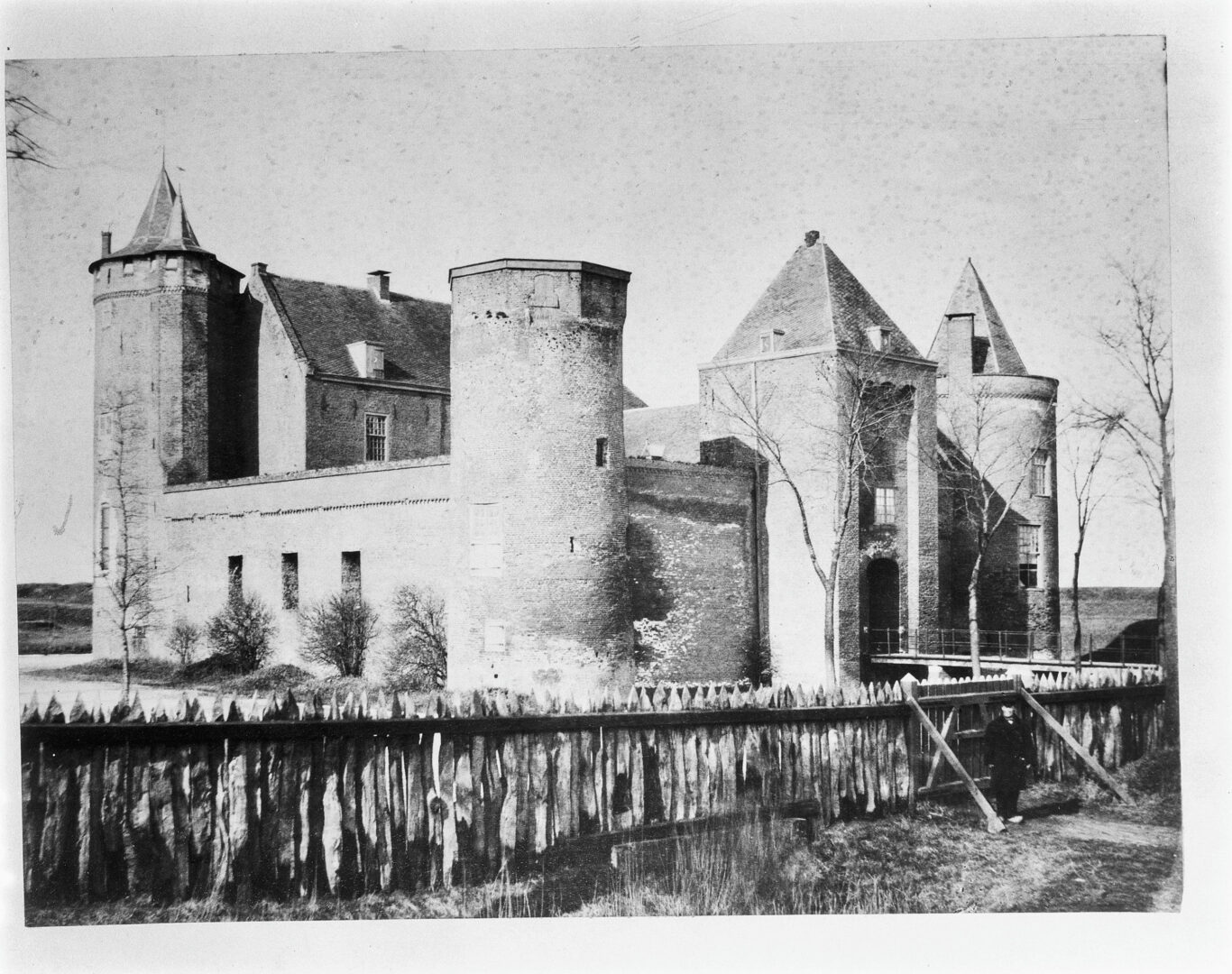
The Muiderslot, before restoration, 1952. Photo National Cultural Heritage Agency
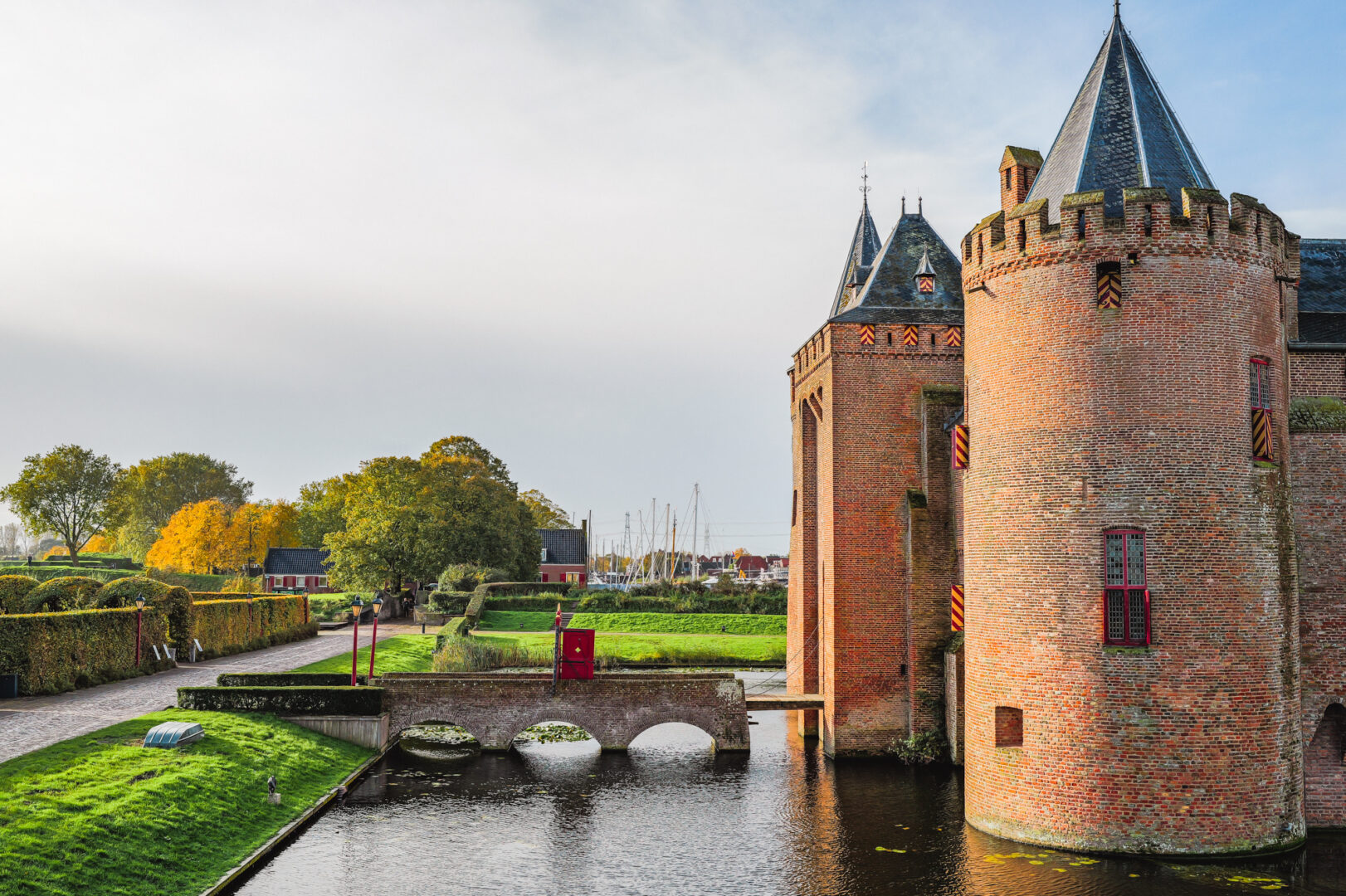
The Muiderslot anno 2025
Opinionated since 1285
Fortunately, it won’t come to that. Even before the sale is announced in the newspapers, there is an action group dedicated to preserving the castle. Eventually, King William I agrees. The Muiderslot is allowed to remain, but still needs to be restored. The Ministry of the Interior is responsible for this. They want to rebuild the castle into the national museum of the Netherlands. Unfortunately, there is no money for this. Fifty years later, the Muiderslot becomes a national museum after all. And it still is to this day.
The Muiderslot has an eventful past, but that is precisely what makes it one of the oldest and best preserved castles in the Netherlands. In the museum you will experience 700 years of history, with original medieval elements and objects from the 17th century. But we also look to the future. Because the history of later, we make now! What will the castle look like for the next 700 years?