Visit
Visit
 Explore
 Education
 Stories
 About us


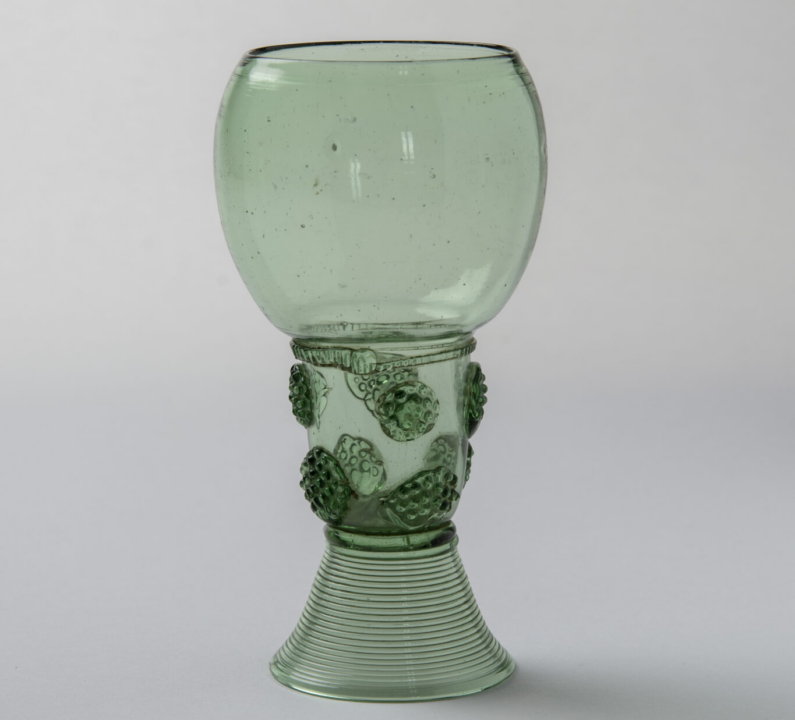
Roemer: drinking glass from the seventeenth century
What are rummers?
You can recognize them by the convex chalice and the thick stem with studs. Guests drank collectively from one glass. Because people ate a lot with their hands, they were often slippery and greasy. Fortunately, the studs on the stem provided extra grip.
Until the early eighteenth century, most rummers in Germany were made of forest glass. Forest glass is a type of glass composed of sand and potash. Potash is a salt mixture created when wood is burned and the ashes dissolved in water.
The green color of the glass is due to the type of wood used for the potash. The studs on the stem were applied separately. This involved dripping molten glass onto the stem. A wooden or ceramic stamp was then used to press the motif into the glass.
Runners
The chalice of this rummer continues into the stem. That is why this type of rummer is also called through-stemmed. The foot is also distinctive. It is made of spiral twisted glass wire: glass pulled into thin, long threads.
This type of rummer was developed at the beginning of the seventeenth century and was a popular showpiece on still lifes. These are paintings depicting only objects, such as flowers and fruit.
Glasses with a soul
At the Muiderslot has been the scene of many a party throughout the centuries. And that involved a lot of drinking. Glass artist Arnout Visser examines a number of seventeenth-century rummers from the collection of the Muiderslot. According to him, they are glasses with a soul: ‘This is how you’re supposed to make glass!‘